Bathroom Waterproofing and Tanking in East Lothian
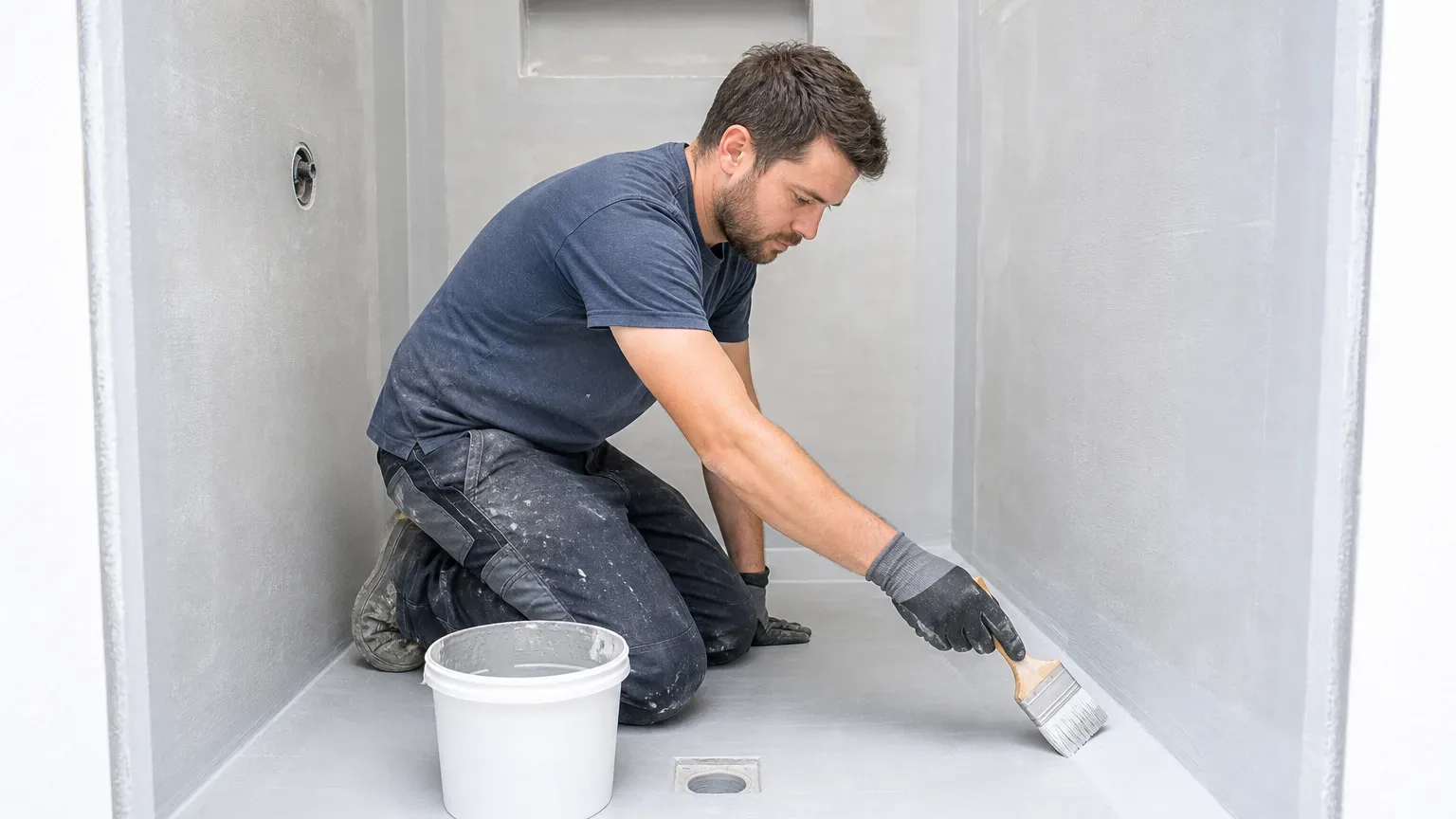
Why Waterproofing Determines Whether a Renovation Lasts
Water is the single most destructive element in any bathroom. Without a proper barrier, moisture migrates through grout lines and tile adhesive into the substrate, where it feeds mould, degrades plasterboard, and eventually rots the structural timber beneath. In East Lothian's older housing stock, particularly the stone-built terraces in Haddington and Victorian semis around Musselburgh, damaged substrates are expensive to repair because access often means stripping walls back to the masonry.
A properly tanked bathroom resists this process from the outset. Tanking is applied to all wet room and shower enclosure substrates before any tiles go on, treating it as a core construction step rather than an optional finish. Skipping it to save a few hours on a renovation schedule is a false economy that tends to reveal itself within two or three years.
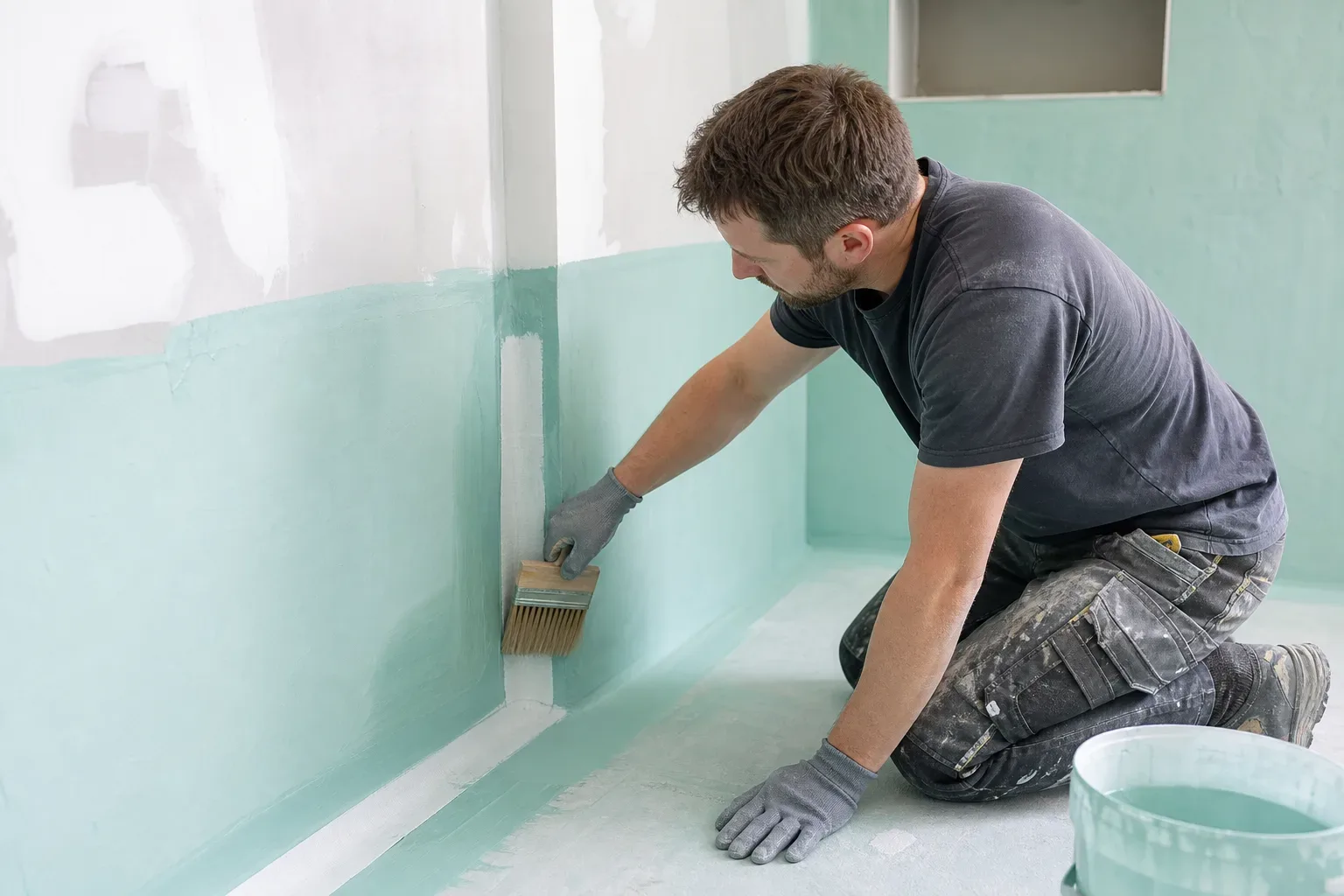
What Is Tanking and How Does It Work
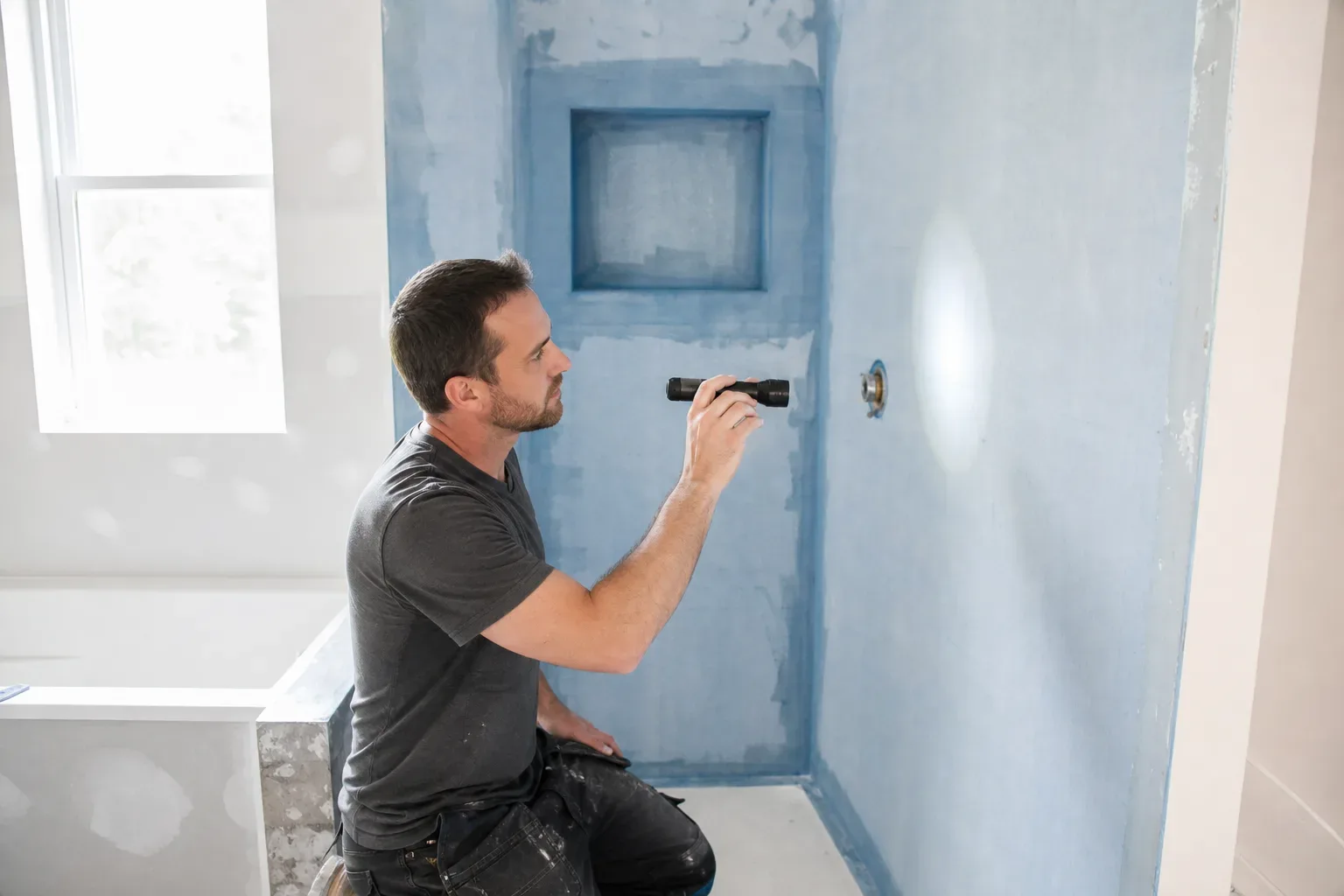
Tanking is the application of a waterproof membrane, either a liquid-applied compound or a sheet membrane bonded to the substrate, that creates a continuous barrier between the wet surface and the building structure behind it. Liquid tanking compounds are brushed or rolled onto prepared surfaces in two or more coats, with particular attention given to internal corners and junctions where movement is most likely to occur. Sheet membranes, which are mechanically fixed and taped at seams, offer an alternative on substrates prone to cracking.
Both methods require the substrate to be sound, dry, and free of dust or loose material before application. Any flex in the backing board or poorly bonded plaster will compromise the membrane regardless of how well the tanking itself is applied. This is why a competent bathroom fitter assesses the substrate condition before quoting, not after the strip-out.
Wet Rooms vs Walk-In Showers - Different Waterproofing Requirements
A wet room is a fully waterproofed, level-access shower room with no tray or enclosure threshold. Because water falls across the entire floor and runs to a recessed drain, every wall and the full floor area must be tanked. The floor typically requires a screeded fall toward the drain, and that screed must cure before tanking and tiling can proceed, adding time to the project.
A walk-in shower, by contrast, uses a low-profile or flush tray with a large opening and no door. Waterproofing focuses on the shower zone, typically a metre or so around the tray and up the walls to at least 200mm above the highest water contact point. This is less material-intensive than a full wet room but still demands proper execution at the tray-to-wall junction, which is where most shower leaks originate.
Confusing the two is a common mistake when planning a renovation. Each requires a distinct specification, and the cost difference is meaningful. Wet room installation in East Lothian typically runs £3,000–£8,000, while a walk-in shower enclosure (supply only) sits at £300–£1,500 before fitting and tiling costs are added.
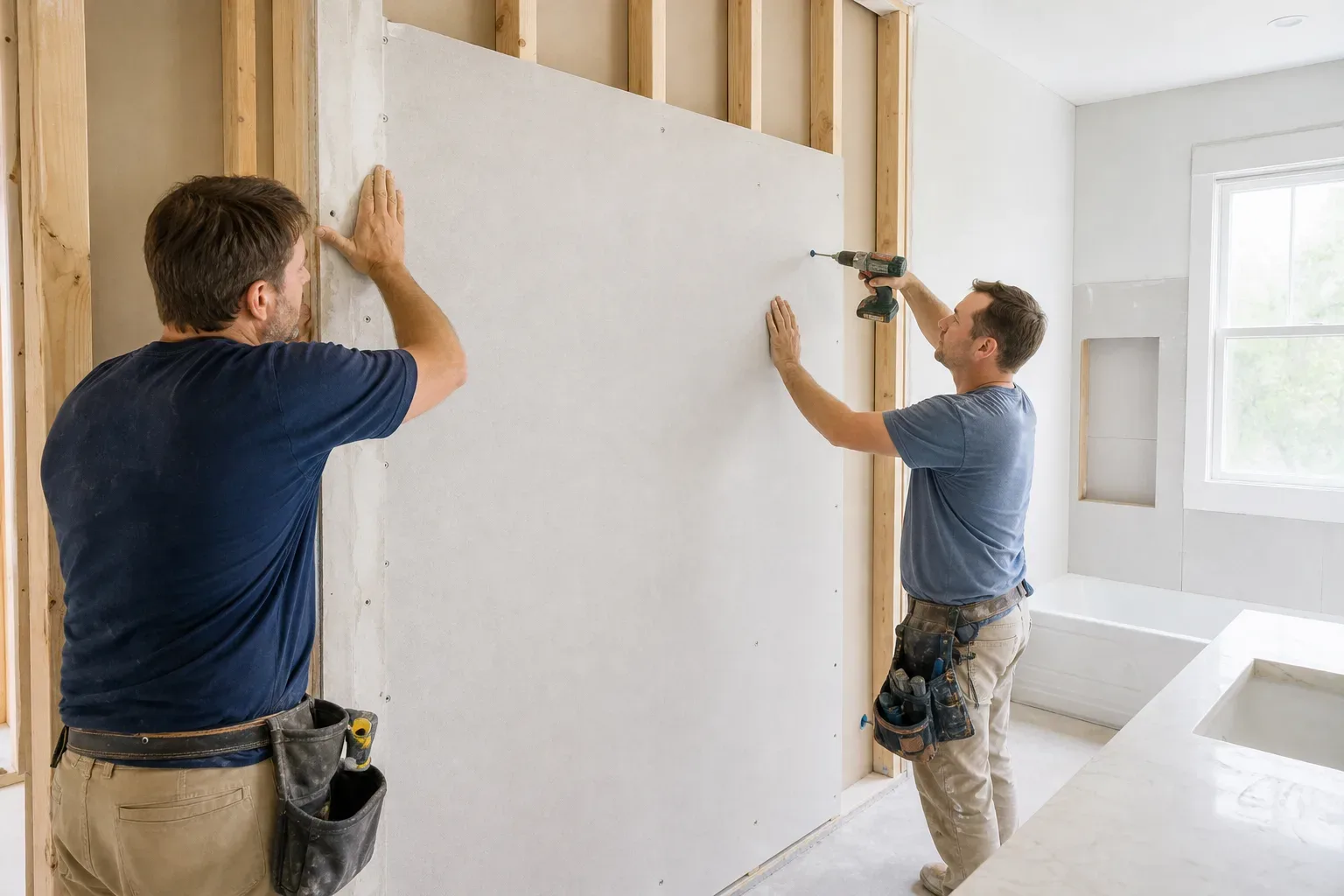
Choosing the Right Substrate for a Tanked Wall
Tile Backer Boards
Fibre-cement or foam-core tile backer boards have largely replaced standard plasterboard in shower zones because they are dimensionally stable when wet and bond reliably with tanking compounds. Brands such as Wedi and Schluter Kerdi-Board are used across professional installations in Scotland. The boards are fixed to the stud or masonry with appropriate fixings and then tanked before tiling.
Existing Plaster Backgrounds
Existing plaster in older East Lothian properties can be retained if it is firm, flat, and not already showing signs of damp. However, many fitters recommend over-boarding rather than tanking directly onto plaster, because historic lime-based renders can contain salts that bleed through coatings over time. The additional cost of over-boarding is modest compared with the risk of failure.
Waterproof Plasterboard
Moisture-resistant plasterboard, often called green board, is not the same as a tanked surface. It resists incidental condensation but is not designed to withstand direct water contact. Using it as a substitute for proper tanking in a shower zone is a specification error that will eventually produce the same result as no waterproofing at all.
How Tanking Fits Into the Renovation Timeline
A full bathroom renovation in East Lothian typically takes 5–10 working days from strip-out to snagging. Waterproofing sits early in that sequence: after the substrate is prepared and any plumbing first-fix work is complete, but before tiles go on. Liquid tanking compounds generally need 24 hours between coats and a further curing period before tiling, so the schedule needs to account for this rather than treating it as dead time.
Wet rooms add complexity because the screed must cure, typically 24–48 hours minimum, before tanking is applied. On a wet room project running 5–8 working days, those curing windows are built into the programme from the start. Rushing them by applying tiles too early is the most common cause of delamination failures seen during remediation visits.
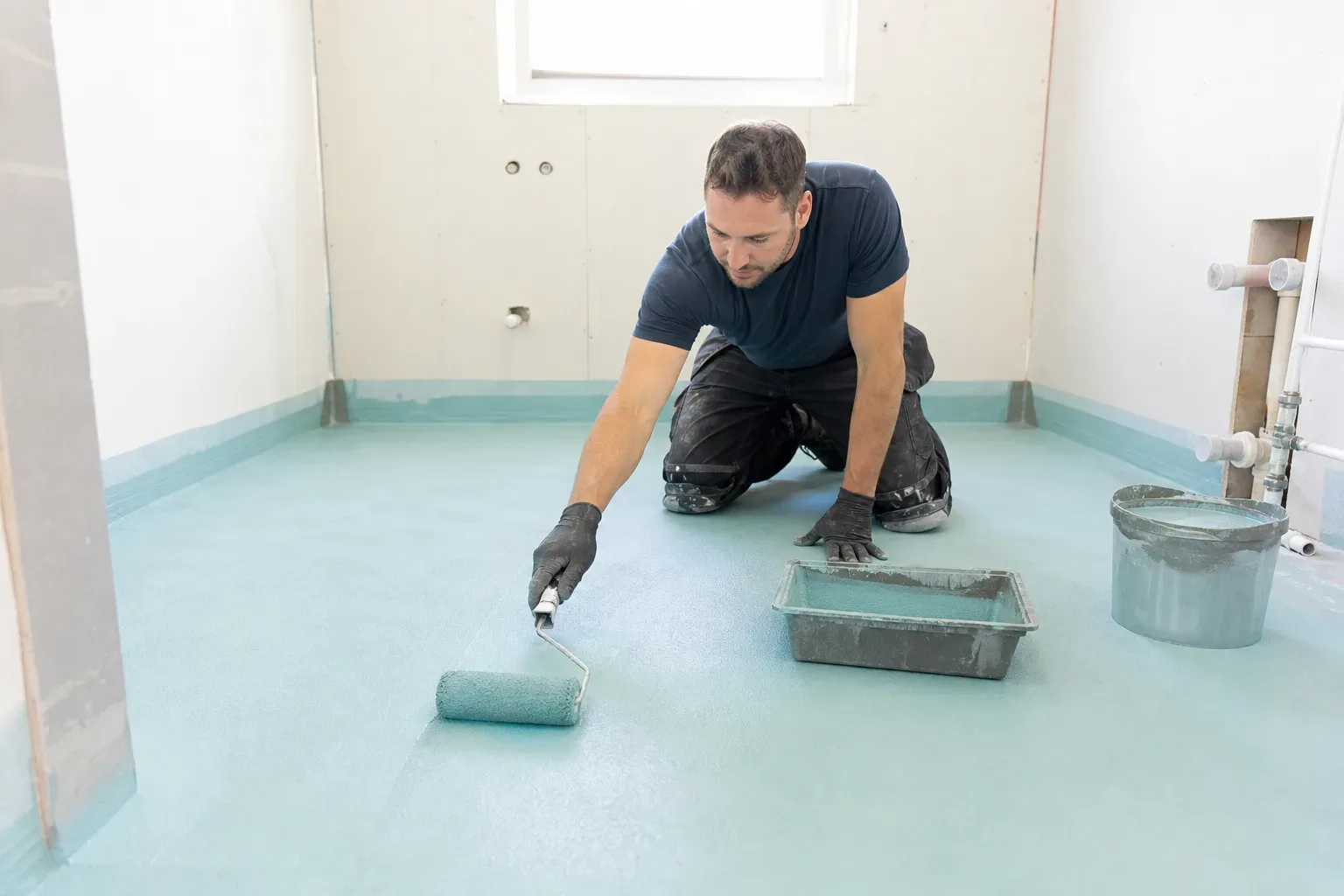
How Much Does Proper Waterproofing Add to Renovation Costs
Tanking materials for a standard shower enclosure, covering approximately 6–8 square metres of wall and floor, cost in the region of £80–£150 for a quality liquid membrane system. Labour to apply it correctly is typically a half-day to a full day, which at East Lothian day rates of £200–£350 per tradesperson means the total waterproofing stage adds £300–£500 to a project before tiling begins.
Set against a full bathroom renovation budget of £4,000–£15,000, that figure is a small proportion of the overall spend. The cost of not waterproofing correctly is considerably higher: substrate replacement, remedial plastering, and retiling a shower zone represent a significant portion of the original renovation cost, applied again, plus the disruption of living without a functional bathroom a second time.
Bathroom Waterproofing East Lothian - What to Check Before Work Starts
Ask any fitter quoting your bathroom renovation to specify the tanking system they intend to use, the substrate preparation method, and the cure times they are allowing before tiling. A clear answer to those three questions distinguishes an installer who treats waterproofing as a genuine specification from one who treats it as a formality.
Most internal bathroom renovations in East Lothian do not require planning permission. Listed buildings and properties within conservation areas may need consent, so it is worth checking with East Lothian Council before work begins if your property falls into either category. All recommended installers should hold relevant CSCS or equivalent trade qualifications, with Gas Safe registration covering any work on sealed heating or hot-water systems connected to the bathroom.
For wet rooms and shower enclosures specifically, ask to see the tanking membrane in place before tiles are fixed. A reputable installer will not object to a brief inspection at that stage, and that single check gives you confidence that the waterproofing layer exists and is continuous before it disappears behind the finished surface.
Frequently Asked Questions
What Is Bathroom Waterproofing?
Bathroom waterproofing is the process of applying a continuous barrier, either a liquid membrane or a sheet membrane, to walls and floors in wet zones before tiles are fixed. It prevents moisture from penetrating the substrate and causing structural damage, mould growth, or rot. In shower enclosures and wet rooms, waterproofing is applied after substrate preparation and before any adhesive or tiles are installed.
Do I Need to Tank a Bathroom If I'm Just Retiling?
If you are removing existing tiles and retiling a shower enclosure, you should inspect the substrate and apply fresh tanking before the new tiles go on. Old tanking compounds can degrade or crack over time, and adhesive residue from the previous installation may have compromised the membrane. A cosmetic retile without addressing the waterproofing layer risks repeating any moisture problems that may have been present.
What Is the Difference Between a Wet Room and a Walk-in Shower?
A wet room is a fully waterproofed, level-access shower room with no tray or enclosure threshold, where the entire floor and all surrounding walls must be tanked. A walk-in shower uses a low-profile or flush tray with a large opening and no door, requiring waterproofing focused on the immediate shower zone rather than the full room. The two require different specifications and different budgets.
How Long Does Bathroom Tanking Take to Cure Before Tiling?
Liquid tanking compounds typically require at least 24 hours between coats and a further curing period, often another 24 hours, before tiling can begin safely. Wet room screeds need a minimum of 24–48 hours to cure before the tanking membrane is applied. Rushing these stages is the most common cause of tile delamination and membrane failure discovered during later remediation work.
Does Bathroom Renovation in East Lothian Require Planning Permission?
Most internal bathroom renovations in East Lothian do not require planning permission. However, listed buildings and properties within conservation areas may need consent before structural or significant cosmetic alterations are made. East Lothian Council is the correct body to contact if you are unsure whether your property falls into either category.