Wet Rooms for Elderly and Disabled Residents in East Lothian
Why a Wet Room Often Makes More Sense Than a Standard Shower
A wet room is a fully waterproofed, level-access shower room with no tray or enclosure threshold. That single design feature, the elimination of any step or lip, reduces the trip hazard that causes a disproportionate number of bathroom injuries among older adults. For wheelchair users or anyone with limited mobility, rolling or walking directly onto a flush floor is a meaningful practical gain, not a cosmetic preference.
Traditional shower trays, even so-called low-profile ones, still require a small lift of the foot. Over time, that small lift becomes a genuine barrier. A wet room removes it entirely, and the open floor plan gives a carer enough room to assist safely.
Accessible Features That Make a Real Difference
Floor and Drainage
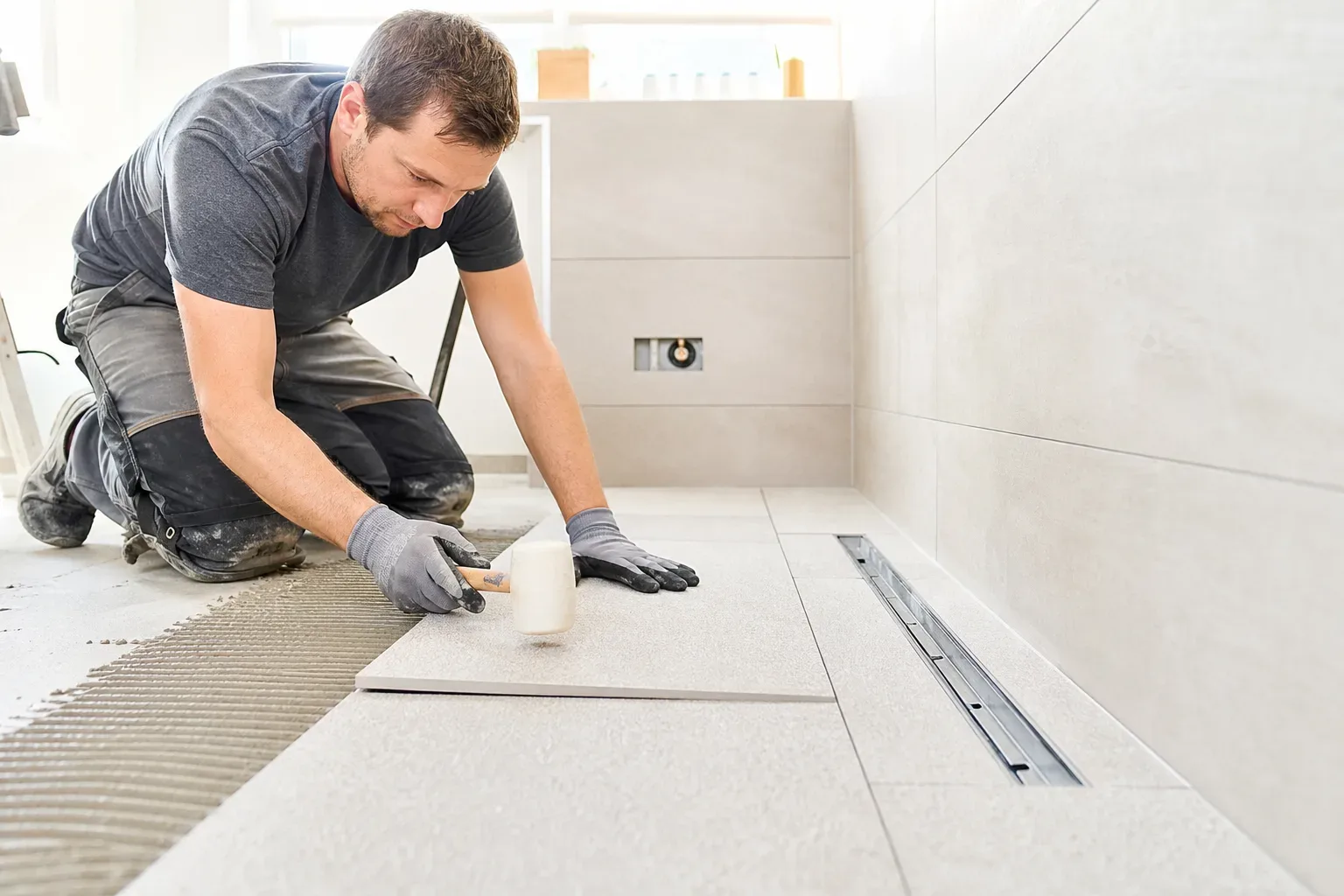
The floor gradient in a compliant wet room falls gently toward the drain, typically around 1:80 to 1:60 across the wetted area. A linear drain running along one wall keeps the gradient consistent across a wider area, which is more stable underfoot than a central point drain. Anti-slip porcelain tiles with a PEI rating of 4 or above are standard for accessible installations; textured stone-effect options are available if aesthetics matter.
Proper tanking sits underneath all of this. Every wet room and shower substrate we recommend is fully tanked before tiling, using a liquid tanking membrane applied to walls and floor. Without it, water migration into the subfloor causes structural damage and potentially dangerous surfaces over time.
Grab Rails, Fold-Down Seats and Thermostat Controls
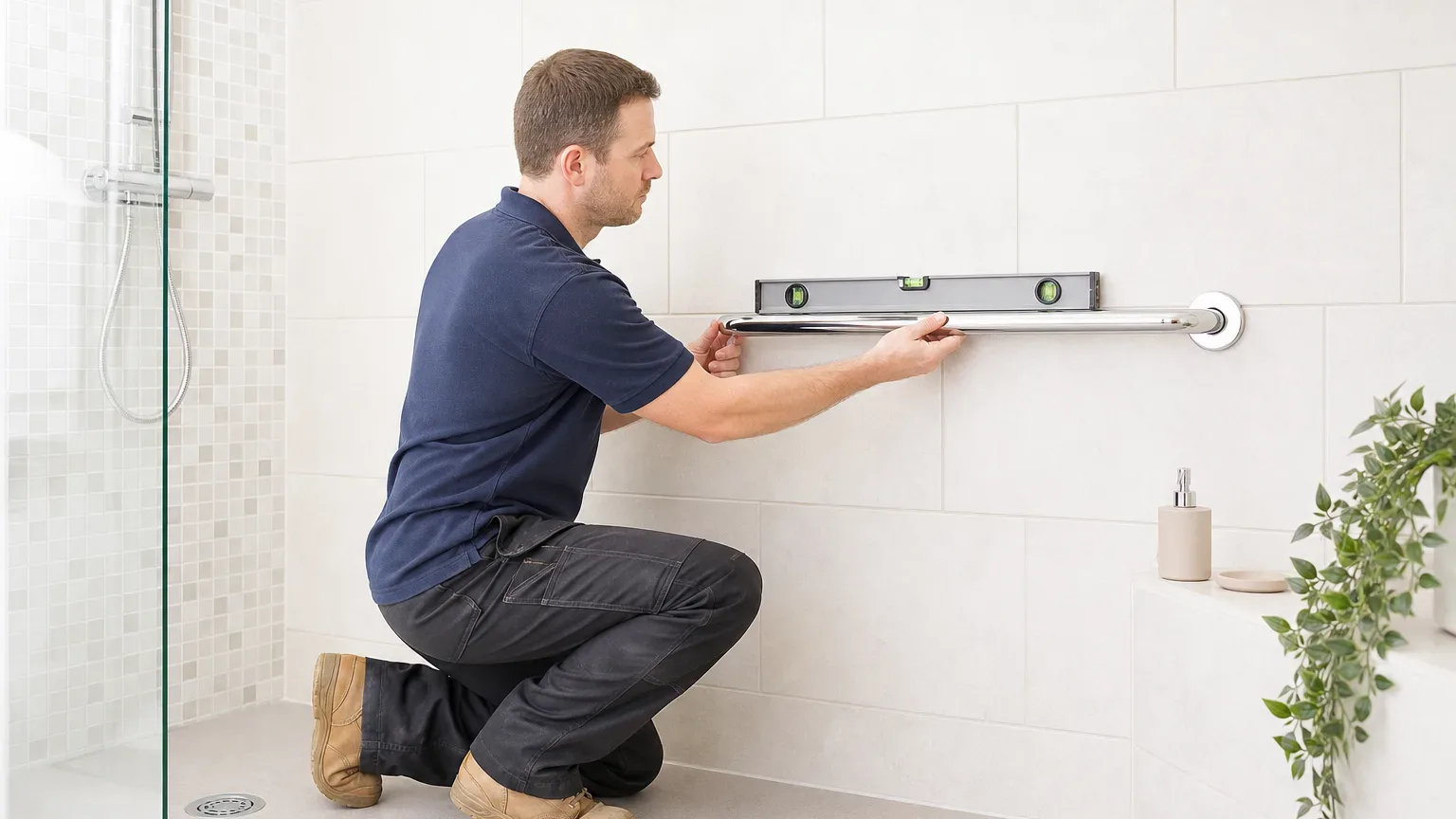
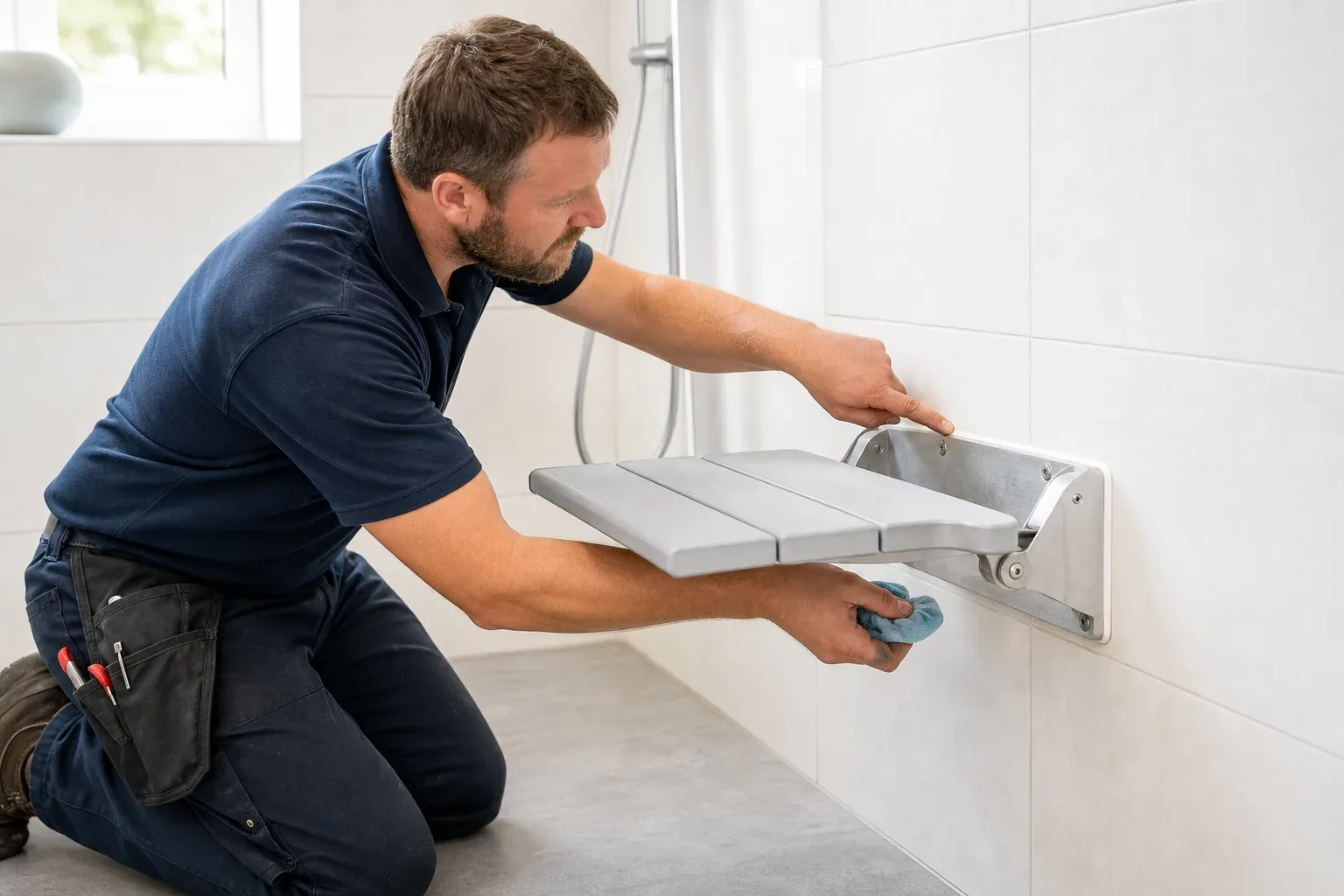
Grab rails positioned at the right height for the user matter far more than the brand. A 300 mm angled rail beside the entry point and a 600 mm horizontal rail at shoulder height on the shower wall are common starting positions, adjusted after a proper assessment. Fold-down teak or composite seats mount flush to the wall and fold away when not needed, preserving space in smaller rooms.
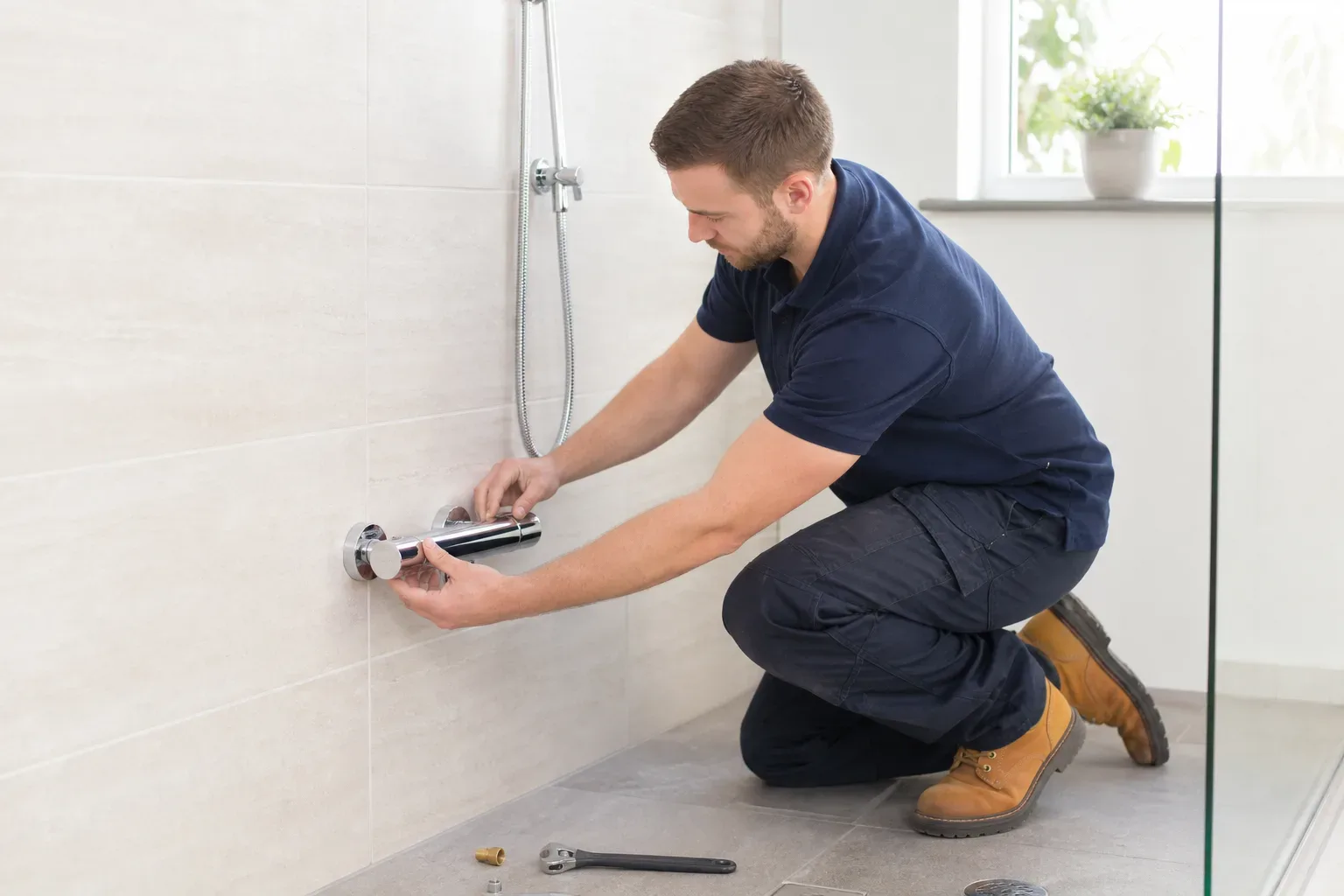
Thermostatic shower valves are worth specifying for anyone with reduced sensation or cognitive impairment. They hold the water temperature within one or two degrees of the set point regardless of pressure changes elsewhere in the house, cutting the scalding risk significantly.
Shower Heads and Hose Length
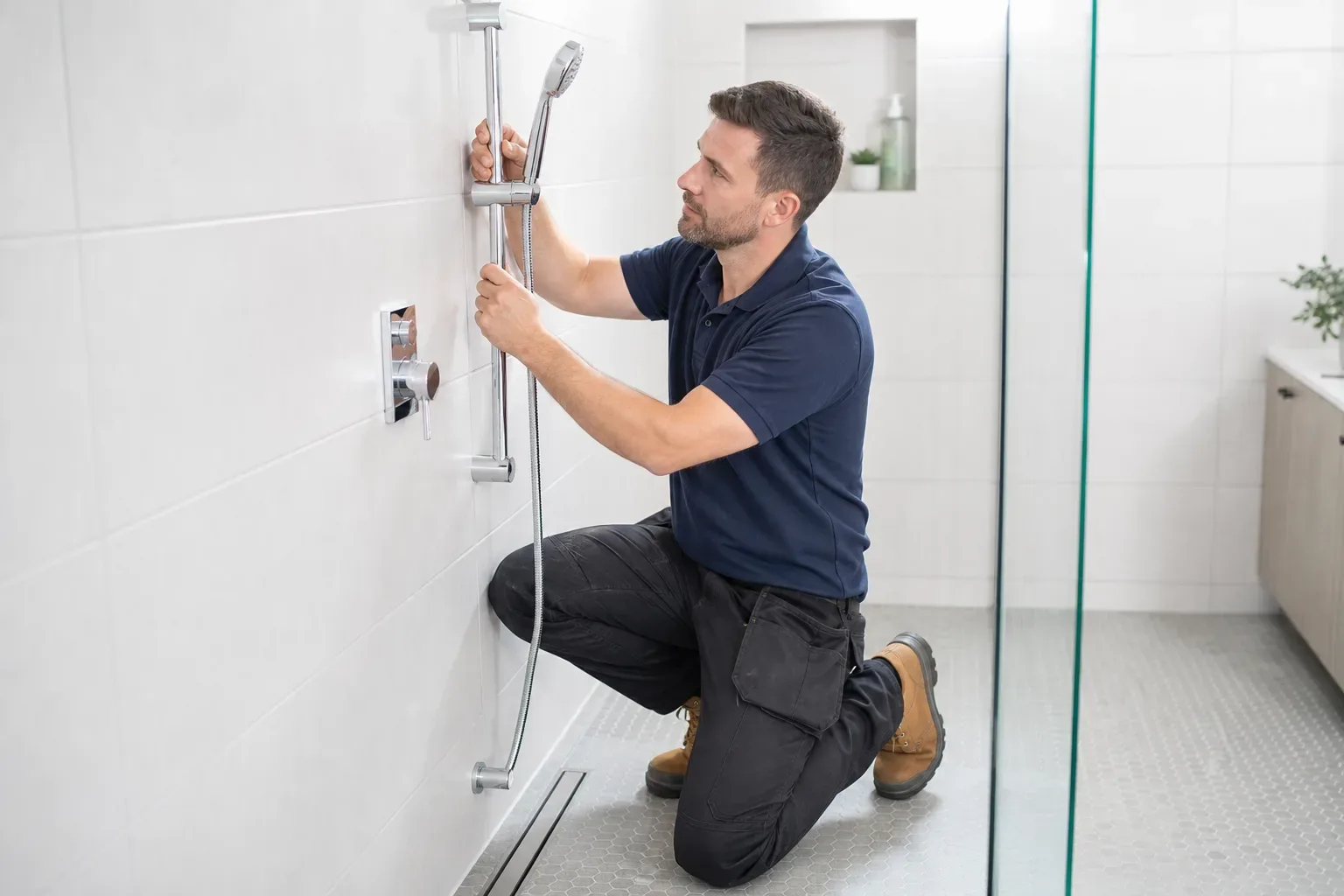
A fixed overhead rose combined with a slide-rail handset gives the most flexibility. The handset allows seated showering without the user having to reach, and a 1.75 m hose gives enough range for a carer to rinse difficult-to-reach areas. Height-adjustable slide rails suit households where the wet room is shared between a disabled user and other family members.
What Does a Wet Room Installation Cost in East Lothian?
Wet room installation in East Lothian typically costs £3,000–£8,000 supply and fit, including tanking, the drain, a screen where specified, and tiling. The lower end of that range covers a straightforward conversion of an existing bathroom or shower room with accessible plumbing routes. The upper end reflects accessible specification work: larger format tiles, linear drainage, structural adjustments, and full accessible fittings throughout.
Labour runs at roughly £200–£350 per day per tradesperson. A wet room conversion generally takes 5–8 working days from strip-out to snagging, with additional time if screeding is required before the tanking can go down. Properties with older pipework, or where the soil pipe needs rerouting, will sit toward the longer and more expensive end of that range.
A bathroom refresh, replacing fittings and finishes without a full strip-out, costs £800–£2,500 and is sometimes the right call if the existing room layout already works and only the fixtures need updating.
Funding and Grants Available in East Lothian
East Lothian Council's Scheme of Assistance and the Care and Repair service both offer potential routes to funding for home adaptations, subject to eligibility. Disabled Facilities Grants can contribute toward the cost of work that helps a person remain safely in their own home, and a wet room conversion fits squarely within the kinds of adaptation those routes are designed to support.
The process typically starts with a referral through an occupational therapist, who assesses the individual's needs and recommends the appropriate adaptations. Care and Repair East Lothian can then help coordinate contractors and navigate the funding application. Contact East Lothian Council's housing or social care team to begin that process; grant amounts and eligibility criteria change, so direct confirmation from the council is always the right starting point.
Does a Wet Room Add Value to a Property in East Lothian?
A well-specified wet room generally holds or adds value, particularly in areas with an ageing population or high demand from buyers planning long-term living in a property. East Lothian has a significant proportion of owner-occupiers in the 55-and-over bracket, and buyers in that group increasingly treat level-access bathing as a desirable feature rather than a specialist adaptation.
The key to value retention is specification quality. A wet room finished with full tanking, durable large-format tiles, and quality sanitaryware reads as a premium installation. One finished poorly, with visible grout cracking or inadequate waterproofing, signals maintenance problems and puts buyers off. The choice of installer matters as much as the fixture specification.
Choosing an Installer for an Accessible Wet Room
Not every bathroom fitter has experience with accessible installations. The gradient tolerances, the tanking methodology, and the positioning of support rails all require specific knowledge. All installers we work with hold relevant CSCS or equivalent trade qualifications, and plumbing work on sealed systems is carried out by appropriately certified tradespeople, including Gas Safe registration where the scope of work requires it.
Ask any installer you approach whether they have completed accessible bathroom or wet room projects before, and ask to see examples. A good installer will also be comfortable working alongside an occupational therapist's specification rather than substituting their own preferences. Most internal bathroom renovations in East Lothian do not require planning permission, but listed buildings and properties in conservation areas may need consent before work starts. Check directly with East Lothian Council if your property falls into either category.
For straightforward enquiries, an initial response and quote can come back within 48 hours. Having a rough floor plan and a note of any existing plumbing positions to hand when you make contact will speed the process up considerably.
Frequently Asked Questions
What Is the Best Wet Room Design for Elderly Users?
The most effective design combines a fully level, anti-slip floor with a linear drain, thermostatic shower controls, and well-positioned grab rails. A fold-down seat and a handset on a long slide rail allow seated showering without straining. The floor gradient should be gentle enough to feel stable underfoot (typically 1:80) while still directing water efficiently to the drain.
How Much Does an Accessible Wet Room Cost in East Lothian?
Wet room installation in East Lothian typically costs £3,000–£8,000 supply and fit, covering tanking, drainage, a screen where needed, and tiling. An accessible specification with grab rails, a fold-down seat, and a thermostatic valve sits toward the upper end of that range. Labour runs at £200–£350 per day per tradesperson, and most jobs take 5–8 working days.
Can I Get a Grant for a Wet Room in East Lothian?
Funding may be available through East Lothian Council's Scheme of Assistance or the Care and Repair service, subject to eligibility. Disabled Facilities Grants can contribute toward adaptation costs for people who need the work to remain safely at home. The process usually starts with an occupational therapist referral, so contact East Lothian Council's housing or social care team to find out what applies to your situation.
Does a Wet Room Need Planning Permission in East Lothian?
Most internal bathroom renovations in East Lothian, including wet room conversions, do not require planning permission. The exception is listed buildings and properties in conservation areas, where consent may be needed before work begins. Always confirm with East Lothian Council if your property might fall into either category before committing to the installation.
How Long Does It Take to Install a Wet Room?
A wet room installation typically takes 5–8 working days from strip-out to snagging. This includes time for tanking membranes to cure before tiling begins. If the floor needs screeding to create the correct gradient, allow additional days on top of that estimate. Complex plumbing reroutes or period properties with unusual substrates can extend the timeline further.